Showing posts with label Sony Ericsson. Show all posts

Friday, December 30, 2011

Sony Ericsson Xperia X8 Design

You may actually mistake the Sony Ericsson Xperia X8 using the X10 mini (or vice versa), if you are just looking at the images, because both handsets look almost identical. The truth is though, The X8 shows its superiority by treating you to definitely its 3-inch capacitive LCD screen along with resolution of 320x480 pixels - ample for this screen size. Because it's a standard TFT (IPS LCD or AMOLED have yet to operate their way to the mid- as well as low-end), viewing angles are now quite of the same quality. Although it should be capable associated with showing 16 million colors, gradients are not even close to perfectly smooth. Not that this is all unbearable obviously - we can live with this, especially having in mind the flawless touch registration from the capacitive panel. Outdoor visibility isn't an excellent issue, especially if you have the brightness bumped towards the max, but you'll still have in order to shield the display in extreme circumstances.

Sony Ericsson Xperia X8

Below the screen you can discover the mandatory Menu, Home and Back keys which are totally in the style of Xperia Andorid cell phones, meaning chrome-like, adding to the stylish appearance from the Sony Ericsson Xperia X8. The right side is in which the volume rocker and one-step camera shutter (the actual 3. 2MP camera lacks autofocus) tend to be situated, and on the top you've the power/lock key, microUSB port along with a standard 3. 5mm headset jack.

Sony Ericsson Xperia X8

The Sony Ericsson Xperia X8 is in no way an unattractive phone. Quite the in contrast, it is one of the better looking Androids available. Well, to tell you the reality, the body has a slight cheap feel into it, mostly due to the plastic back cover. However, rear covers are also a powerful point of the X8, because it is simple to replace these with other color variations. All in all, the Sony Ericsson Xperia X8 is really a very elegant device, to say minimal.

Sony Ericsson Xperia X8 Other Things

The good thing is the X8's touchscreen uses capacitive technologies, so it's immediately more usable than other entry-level Android phones such as the LG GT540 and Vodafone 845, designed to use the cheaper, less sensitive resistive technologies. And don't work.

Xperia X8

The form factor from the Xperia X8 is identical to that from the X10 Mini – only bigger. Meaning a curved back with easily detachable cover, three silver buttons beneath the actual screen – Android-standard Menu, Home and Back – combined with the camera and speaker around the back again.

The top edge of the telephone features the micro-USB connector, which may be covered by a little plastic stopper to prevent it accumulating handbag dust. Also this is actually the power socket in the middle as well as 3. 5mm headphone jack.

Down the actual right-hand side sit the metallic-effect quantity rocker and physical camera button. Unfortunately, as with the Xperia X10 Mini and X10 Mini Pro and several other new entry level Android cell phones, there's no optical or physical trackpad about the X8.

Xperia X8

And that's your lot. The telephone itself feels solid and well-made, especially considering its £140 SIM-free selling price, with tough buttons and a strong screen.

Sony Ericsson Xperia X8

The Sony Ericsson X8 really should have a lot going for it, as it's actually a small, affordable Android phone that packs to all the essential features. However, it doesn't quite hang together and you'll find simply better cheap Android phones offered.

Xperia X8

We've got exactly what we thought for. After being rather impressed by simply Sony Ericsson's ultra-small Xperia X10 Tiny and X10 Mini Pro, we couldn't help but wonder precisely what Sony Ericsson's heavily customised Android OS would resemble on a phone with a middle-of-the-road screen that sits anywhere between that of the monster X10 plus the tiny X10 Minis.

And that's what exactly we've got here. The screen in the Sony Ericsson Xperia X8 is three inches in space, so slightly smaller than the 3. 2-inch norm as seen in companies the HTC Legend, LG Optimus One and a lot of, many more Android phones.

Xperia X8

ony Ericsson's Xperia series is among the most manufacturer's most exciting lineup of telephones. First, there was the Windows Mobile-powered Xperia X1. And then along came its successor, the X2, and also the Android-based Xperia X10. We also must not forget those little fellas - your X10 mini and mini pro, which redefined this is of compactness. The latest addition on the Xperia lineup is a budget-cautious Android mobile phone handset, which comes in a classy outfit - the Sony Ericsson Xperia X8. Via first sight, the X8 looks as being a pretty decent lightweight smartphone; it has the way they look, a passable 3-inch capacitive screen, or a pleasant and easy-to-use software. However, does everything the Xperia X8 is competent at come together nicely to form a new worthy all-round smartphone package?

The X8's design is often a tough one to nail down. It's clearly not essentially the most elegant device going and its plastic-type material construction certainly makes itself known. On the other hand, it feels solid and well build, and has a certain charm. In case colour's your thing, you'll be pleased to know the backplate is available in several thereof, though the front remains pearlescent white whichever you ultimately choose.

You might actually mistake the Sony Ericsson Xperia X8 while using X10 mini (or vice versa), should you be just looking at the images, while both handsets look almost identical. Actually though, The X8 shows its superiority by treating that you its 3-inch capacitive LCD screen using resolution of 320x480 pixels - sufficient for this screen size. Because it is just a standard TFT (IPS LCD or AMOLED have yet to function their way to the mid- along with low-end), viewing angles are now quite of the same quality. Although it should be capable involving showing 16 million colors, gradients are not even close perfectly smooth. Not that this is all unbearable naturally - we can live with the idea, especially having in mind the flawless touch registration in the capacitive panel. Outdoor visibility isn't a terrific issue, especially if you have the brightness bumped on the max, but you'll still have for you to shield the display in extreme conditions.

Sunday, December 25, 2011

Sony Ericsson Xperia Ray Opinion

To begin with, the Sony Ericsson Xperia Ray hardware. There isn’t really something to complain about. Yes, the screen is small but if you prefer a bigger one, you should check away the Neo or the Arc rather. Fine handsets both of them, however lacking that sharp sporty feel.

Sony Ericsson Xperia Ray

Dimension aside, the screen is among the greater LCD units we've seen. The sleek interface and some of that Bravia miracle really help sell it.

Sony Ericsson Xperia Ray

On the Sony Ericsson Xperia Ray software side, the ray is up to regular. Flash videos are something the Sony Ericsson team needs to take a look at, even though Flash overall worked good (games too).

Sony Ericsson Xperia Ray

While the Neo and also the Arc do well in their functions, there is a shortage of high quality compacts in Android, which even other manufacturers neglect to address. And no, the Xperia small doesn’t fit that bill.

Sony Ericsson Xperia Ray

The Sony Ericsson Xperia beam does. It’s small, as in an attractive little sports car, rather than small to maintain the costs down. The Xperia ray is hot also it knows it. That puts a large amount of pressure on it to do well within the upcoming review. But as far because we’re concerned, the Xperia ray is off to some roaring start.

Sony Ericsson Xperia Ray fresh Sony Ericsson's

Sony Ericsson's fresh Xperia Ray bucks the trend of large-screened handsets having its 3. 3in screen, and yet - amazingly - that crams in everything you'd expect from your high-end Android smartphone: a 480x854 decision, 8-megapixel camera and a 1GHz Snapdragon chipset. Enhance this plenty of storage space and also a 4GB microSDHC card and an DIRECTED flash, and you get a powerful smartphone with all the current features you might need that's simply 9mm thin and weighs just 100g.

Sony Ericsson Xperia Ray

Where most touchscreen phones fit a 480x854 resolution in to a 3. 7in or 4in screen, the particular Ray crams it into only 3. 3in regarding diagonal space, resulting in a pixel thickness of almost 300ppi, the density beyond that your human eye can't perceive individual pixels. It is not quite as dense as the i phone 4's display, but it's not remote.

The Ray's Scorpion processor isn't any dual-core model, but feels incredibly speedy. This is one of the handful of Android smartphones whose interface feels really smooth and responsive. There's 1GB regarding internal memory, which leaves you with about 320MB of app space for storing. This should be more than ample for some people's needs, plus there's a 4GB microSDHC card inside the box.

The 8-megapixel camera is furthermore impressive and, coupled with the DIRECTED flash, it can handle low-light ailments. Shots are clear and colourful, and there's a lesser amount of noise in dark areas than we're utilized to seeing from a phone camera. Videos were also detailed however, not as colourful as photos. Movement was jittery as there isn't any motion smoothing, but the high decision still makes them better quality as compared to your average Facebook video.

Build top quality is superb. The frame is aluminium as well as the plastic back cover has a rubberised coating to boost grip. The front is all-glass, but there's an inch above and below the screen and also a few millimetres on either side. We all liked the large Home button, especially as it unlocks the screen so you don't need to reach to the top of the device for the power button. There's any 3. 5mm headphone jack and any microUSB port, plus a volume rocker around the right side, but no camera shutter option.

Sony Ericsson Xperia Ray 480 x 854 pixels

The actual Sony Ericsson Xperia Ray's screen may be the same resolution as the Xperia Arc's incredible display, which means 480 x 854 pixels. But it is a lot smaller, at 3. 3 in ., compared to the Xperia Arc's four. 2 inches, which means a higher density.

Don't underestimate this – when you consider the Xperia Ray's display, you will not believe how clear it's. Put it next to an Apple Retina display and you will notice there isn't much in this.

Sony Ericsson Xperia Ray

Colours on the whole look wonderful, although we were disappointed with the caliber of our blue sky wallpapers, which looked much more washed out than they did about the Samsung Galaxy S2. Plus the clearness is incredible.

We did find that people often had to tap a button or function again since the first go didn't register. We had exactly the same issue with the soft keys. This wasn't a deal breaker, but it had been unresponsive enough for us to notice and obtain slightly frustrated.

We're shallow enough to admit that certain thing we love is the animation whenever you turn the display off. Hit the Standby button and the screen decreases and disappears right into a white line in a deliberate echo from the sequence we'd see in the past when turning off an old CRT Television set - first seen on the Search engines Nexus S.

Sony Ericsson Xperia Ray

It's a cosmetic add-on that adds no functionality. It's the gimmick. And it's pointless. But guy, did we love it. And so did our friends we showed it to. Little things, small minds.

As with all modern cell phones, the glass is apparently toughened. We couldn't see any literature which defined it specifically as Gorilla Glass but whatever it's, it's not great.

Sony Ericsson Xperia Ray

It has been a busy old year for Sony Ericsson. As it struggles to regain a foothold on the market it was once sucha major participant in, it's been firing out more Android-based Xperia smartphones than long-lost relatives with an episode of Jeremy Kyle. And they are not half bad either.


Sony Ericsson Xperia Ray

The Xperia Arc may be the flagship of 2011's bunch. Arriving within the spring, it became the skinny poster girl for that Swedish-Japanese hybrid, showing off its amazing screen presence by using the Sony Reality Display (the bit that reproduces colour about the screen and makes it look great) however in the Xperia Ray, Sony Ericsson went for a smaller model.

Before we go any more, there is one point we need to make clear: this phone is little. And thin. Think smaller and thinner than you anticipate, then shave a bit more away your dimensions. That's what you obtain.

Sony Ericsson Xperia Ray

The Xperia Arc (we're likely to be making lot of comparisons towards the Arc in this review) is 125 x 63mm having a depth of 8. 7mm. The Ray slices the majority of that off and comes in in a remarkable 111 x 53mm. It is actually slightly fatter, by less than the millimetre, clocking in at 9. 4mm heavy.

Sony Ericsson Xperia Ray 8MP camera

Sony Ericsson Xperia Ray

Big was in with Android phones but the Xperia ray is desirous to prove that petite smartphones have a charm in their own. All the horsepower of the Arc within a body that's a centimeter shorter both ways - think reduced saloon turned into a roadster. The Sony Ericsson Xperia ray has plenty to present, not the least of which is usually an 8MP camera with HD video recording as well as a Bravia Mobile engine powered screen having eye-popping pixel density.

Sony Ericsson Xperia Ray

The combo Sony Ericsson have assemble includes a 1GHz single core cpu, 8MP camera with 720p video in addition to screen expertise borrowed from Sony's TELLY department. It's the same concoction driving the Arc, the Neo, and the revolutionary Mini - now the Xperia beam.

On the face of it, the Sony Ericsson Xperia ray seems as if a widescreen version of the Minuscule, but whereas the Mini is quite chubby at 16mm, the Xperia beam clocks in at 9. 4mm (in spite of the bigger, 1500mAh battery). The camera is an 8MP unit to keep good current crop of high-end droids.

This 3. 3" screen of FWVGA image resolution has nearly 300ppi pixel density (this Retina display has 326ppi) in addition to we appreciate the mobile incarnation connected with Bravia.

Sony Ericsson Xperia Ray

Here's what the Sony Ericsson Xperia ray offers to those who have been using a lookout for a compact smartphone having high-end specs.

General: GSM 850/900/1800/1900 MHz, UMTS 900/2100 MHz, 7. 2Mbps HSDPA, 5. 76Mbps HSUPA
Style factor: Touchscreen bar phone
Dimensions: 111 back button 53 x 9. 4 mm, 100 gary the gadget guy
Display: 3. 3" 16M-color TFT capacitive touchscreen technology, 854 x 480 pixels, Sony Cell phone Bravia engine, multi-touch input, scratch-resistant exterior
CPU: Qualcomm MSM8255 1 GHz Snapdragon software
OS: Android 2. 3 (Gingerbread)
Ram: 300MB user available storage, 512MB GOOD OLD RAM, microSD card slot, 4GB card as part of the retail box
Camera: 8 megapixel auto-focus video camera with LED flash, face detection in addition to geo-tagging; 720p video recording at 30fps having continuous autofocus
Connectivity: Wi-Fi b/g/n, Wireless 2. 1 with A2DP, standard microUSB dock, GPS receiver with A-GPS, 3. 5mm sound recording jack
Misc: Sony Ericsson Timescape URINARY INCONTINENCE, built-in accelerometer, proximity and ambient light-weight sensors, digital compass, video-call camera

Having already seen the technology into the Xperia ray in other Sony Ericsson gadgets, we know what to expect: smooth Android handling with Sony Ericsson's unique carry out the user interface, great 8MP stills and 720p video in conjunction with audiophile-grade sonic experience.

Sony Ericsson Xperia Ray

It's the design and build on the Sony Ericsson Xperia ray be the big unknown in this preview. Commonly phones are thin and big (age. g. Xperia arc), or modest but chubby (Xperia mini). The ray goes all in that has a modern twist on a timeless typical look. It's a tough act to display, considering touchscreen bars don't allow considerably creativity. But when it works, the results is usually one excellent device.

Friday, December 23, 2011

Sony Ericsson Xperia neo V GPS n Google Map

This Sony Ericsson Xperia neo V features a GPS receiver, which took less than 3 . 5 minutes to get satellite lock at a cold start. You can use the A-GPS functionality for getting near instantaneous locks or the network positioning when you only need a rough idea of this location.

Sony Ericsson Xperia neo V

Our unit came with Atlases 6. 0. 2 out of this box, which gives you access into a great features. Offline rerouting is one – when you stray off course, Maps will recalculate the route with no need for an Internet connection. You can’t change the destination with not a connection though. There are also 3 dimensional buildings, two finger rotation, tilting and many others.

Of course, those features aren’t readily available everywhere. 3D buildings are available mostly from the biggest world cities.

Turn-by-turn voice guidance using Google Maps Navigation should be only available in select countries and unless you live in at least one the best you can do is usually plan a route in advance and be mindful of your current location during travel.

Neighborhood view is, as usual, a section of the standard package - it gives that you panoramic view of every bit of road from the covered areas. With the compass manner enabled, it feels like a virtual tour on the place!

Our Xperia neo V sported Wisepilot pre-installed with 30 days trial run navigation license. It took it really long to have a GPS lock with every GPS setting started, but then it does what a SatNav software is meant to - navigate (with style guidance). There are weather in addition to traffic information too.

Sony Ericsson Xperia neo V Opinion

A new downgrade. A B-lister. You can do not delay - call it what you want. The Neo V will be the only kind of damage control SE could do inside aftermath of the dramatic events throughout Japan that held hostage half your mobile industry.

Sony Ericsson Xperia neo V

The time was up to the Neo - and quite unexpectedly way too. The Neo V was called in just as one emergency replacement and no one expected miracles of computer. Especially since the very essence in the original Neo was the cameraphone expertise, which is exactly what got downgraded on this occasion.

So the Neo V is certainly not the cameraphone the Neo was used to be. And it’s not only the bottom resolution stills. The 720p videos are certainly not quite up to scratch either.

Sony Ericsson Xperia neo V

So in the operation of replacing the Neo, Sony Ericsson was required to redefine the whole idea behind the idea. In the end, we received a convincing midrange smartphone that shares many of the premium features of the company's flagship – at a bit more affordable price.

The Neo V is often a 1GHz-powered smartphone with a 3. 7" monitor, 5MP still camera and HD online video. Guess what - this could nearly describe half the droids around. Plenty of competition, not to mention it’s on par with what Windows Phones at the moment offer.

The Sony Ericsson Xperia beam is perilously close price-wise. And it’s a new tempting deal. Not because of better camera but because it's got a new slimmer profile and genuinely more figure. Then again - a bigger screen is usually an asset. The Neo V's 3. 7-incher beats the Ray as well as 3. 3" screen.

The LG Optimus Black sounds quite tempting too - they have a bigger 4" NOVA display, along with similar 5 megapixel camera and computer hardware platform. The Optimus Black costs almost similar to the neo V, so it is a great option if you are into major screens.

Sony Ericsson Xperia neo V

So, in the end. Your neo is dead. Long live, neo Versus? Not quite. More like - one fails, another takes its place. The Neo Versus got no choice - but probably has some future. As long mainly because it chooses wisely what it wants to get. A cameraphone may be a prolonged shot, but a decent smartphone – it’s pretty achievable.

Sony Ericsson Xperia Play Hardwear

The very first thing you notice when you get the Sony Ericsson Xperia Play is its size and heft. From 119mm x 62mm x 16mm (four. 68in x 2. 44in by. 63in) and 175g (6. 17oz), the PLAY isn't any small phone in your fingers. The real problem for me was the thickness from the device. While I understand it facilitates the game pad, the actual Motorola DROID or DROID two, both of which have slide-out bodily keyboards, feel anorexic in assessment.

The tapered edges of the rear cover do help the xperia PLAY fit comfortably within the hand, but when I was utilizing it as I would any additional smartphone (read: not video gaming), it just felt like it had been bigger than it needed to be for the task.


The front from the Xperia PLAY sports a 4-inch, FWVGA (480 x 854 pixel) touch screen above four physical keys for that standard Android functions of back again, home, menu, and search. The screen itself isn't bad, though it definitely doesn't have the punch or wow factor of the Super AMOLED Plus or perhaps a Super LCD display. It could stand to become a bit more responsive to my touch too, as sometimes it would consider multiple presses or swipes prior to the screen would register my enter.

The display is also positioned off-center for the bottom of the phone, which provided an awkward handling position when utilized in portrait orientation.

Sony Ericsson Xperia Play

The buttons themselves are small along with a bit fiddly, though they did work after i needed them too. The cheap chrome finish on them has to go, though; it looks poor now, and I imagine it won't wear well over time. All of those other phone is made of polished plastic, which not only provides cheap feel to the Xperia Play but is also a severe fingerprint magnet.

The rear include constantly looked filthy with smudges and fingerprints, so I had been constantly wiping it off along with my t-shirt. A textured or soft-touch back might have lent a lot to the feel you might expect to get from the $200 smartphone. The power switch, which is tucked in top of the right corner of the telephone, is very tiny and hard to get into. It features an integrated notice light, which is cool, though I discovered it a bit tough to note since the button is hidden behind the display.

As far since the gaming pad goes, certain features worked well, while others skipped the mark. The four-way directional pad and also the square, triangle, circle, and X buttons worked properly and were responsive during action. The touchpads that are made to mimic analog sticks were another story though. I found it hard to make use of them to control objects within games, and found them to complete different things from what I was expecting frequently. With the thickness of the actual Xperia PLAY, I think Sony Ericsson might have used the analog stick on the PSP gaming handheld without a lot trouble.

Thursday, December 22, 2011

Sony Ericsson Xperia Play PlayStation Pocket

Similar to the hardware section, we'll get right to the PlayStation meat of this Xperia Play software matter. Two apps will likely be of foremost interest here: the certainly not confusingly named Xperia Play, which serves to be a showcase for Android Market games best with the Play's controls, and this PlayStation Pocket, which houses the hallowed PS One games that it new smartphone is so primed have fun with. For the moment at lowest, we should probably narrow that because of the singular game, since the Play ships with just one preloaded classic title, Crash Bandicoot, and other PS One library is still on the way. That puts the Play's introduction, coming up on April 2nd across Europe, into a quite precarious position. It's supposed for being the bringer of great new entertainments towards thumb-equipped masses and yet we're viewing just one original piece connected with content upon its release. Bruce Shelter, FIFA 10, Star Battalion HARLEY-DAVIDSON, and The Sims 3 complete come preloaded to soften this blow, but they're not exclusive towards Play, and in the particular case on the Sims, don't even benefit completely from the physical controls. However, they're there and the method for accessing them is actually rather swish. Opening up the slider kicks you right into the Xperia Play app, where the games you have already on the device are split out of the list of purchasable compatible post titles, meaning you're never more compared to a slide and a tap clear of leaping into action.

Sony Ericsson Xperia Play

Loading times with the games aboard the Play were being quite tolerable indeed -- almost nothing was instant, but only by far the most impatient of gamer would obtain them a nuisance. In-game performance likewise gave us no cause intended for complaint, with smooth frame premiums throughout. The basics look to have been well dealt with. One drawback we should identify, however, is the fact that the majority of, if not all, PS One games were coded for displays that has a 4: 3 ratio. That means either zooming or stretching the game as a way to fill the widescreen panel within the Xperia Play. Both options are available in the settings, but Crash had been looking pretty aliased without us zooming set for a closer inspection. Not the best situation, but that's where most of us find ourselves. At least until Sony decides it might be wise to drop its vast collection of PSP games atop this piece of equipment, then we'll have no like worries.

Sony Ericsson Xperia Play

The xperia play gamepad is not abandoned completely when you finally stray outside the gaming area, as you're able to navigate through lists while using the D-pad and select and cancel things while using the X and O keys. It is just a somewhat inconsistent affair, as this integration doesn't permeate everything within the Xperia Play, but we found it useful from the browser and messaging apps.

Sony Ericsson Xperia Play The gamepad

This PlayStation Phone. We've had quite the intimate history on this gamepad-equipped slider, learning of its secretive existence sources that are in August and then handling some sort of prototype unit in January, so you'll forgive us for feeling sentimental nonetheless entertaining our pet name for the item. The Sony Ericsson marketing gurus renamed the item the Xperia Play when it finally went official at MWC this holiday season, but the PlayStation connection remains seeing that strong as ever. Aside from this D-pad, iconic game keys, and a couple touchpads, this device comes with a bit app named PlayStation Pocket, which will likely be serving up dollops of classic PlayStation One gaming to every one those with a taste for the item. Yes, the Sony influence is strong on this one, and the Android Market will likely be joining the fun with Xperia Play-optimized post titles from third-party developers. So all we should really know now is whether the Operating system smartphone underpinning this smash-bang fusion connected with old and new school entertainment has become any good. Shall we get Started off?
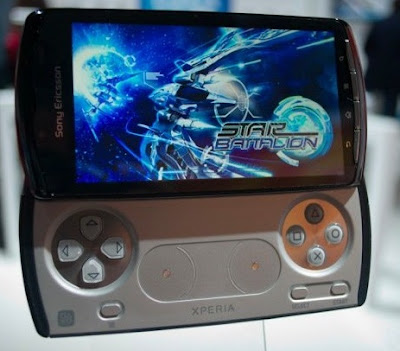
Sony Ericsson Xperia Play

There's likely little point in us trying to discuss from any of the Xperia Play's external hardware before approaching its literal and figurative centerpiece, this slide-out gamepad. A DualShock attached to your smartphone it's not necessarily, but you already knew that. The important question is how close it pertains to replicating the console experience rather than how well it competes about it. Judged on such terms, the Play acquits itself wonderfully. The digital directional keys are firm that has a satisfying amount of travel and identical goes for the face buttons. Squeezed concerning them, Sony Ericsson also throws in a couple analog pads, which react to your input in in the same fashion as the capacitive touchscreen does -- while using the big difference being that while you make use of the pads you're not obscuring from any of the action on screen. Each pad incorporates a handy indented dot at its core, helping to orient your thumb with no need to look down.

Sony Ericsson Xperia Play

An Android Menu button on the end left is accompanied by Select you need to keys on the right (a minimum of one of these three buttons feels perfunctory since they serve overlapping functions) and there are two shoulder buttons on the lateral side, where you would usually find the L1 and R1 controls within the proper console gamepad. Some among our staff took to calling them flippers, because they're nearer to flaps or paddles in their operations than fully fledged buttons. In precise gameplay, we found them a very little too sensitive, which caused us to activate them unintentionally more than once and fail almost completely when persuaded by one game to press these individuals simultaneously. We succeeded once out of any six or seven tries, such was the capriciousness in their design.

The sliding mechanism responsible for serving the gaming controls is pretty much sleek. It's spring-loaded, meaning you only need to fall it halfway up or down to own required opening or closing action and it also does the rest by itself. Mobility is smooth and consistent, and one-handed operation isn't a problem either. What impressed us most concerning this, though, was its sturdiness. There's no tilt towards handset, the screen just slides perpendicularly, and that's the way it stays on -- perfectly parallel, no matter the violence your attempts to find any structural weaknesses. It's clear to see that Sony Ericsson spent time refining this slider and we're happy to say it lives up to very high standard of durability -- a bare necessity when making a button masher's device along these lines.

Moving to the top half on the slider, we find a volume rocker, nestled craftily concerning the aforementioned shoulder buttons, a electric power key, and the usual four Operating system buttons, arranged in yet another impressive formation. For whatever reason, Sony Ericsson opted to swap your house and Menu buttons' positions up entry, leaving our prototype unit looking desperately obsolete and us wondering why it needed to be done at all. While we've no complaints to proffer around the power and volume keys, we must express our deep discontentment while using the Android set. They're quite spongy, meaning they can absorb many pressure before registering a click, which can lead to an inconsistent and disheartening user experience. Even more troublesome would be the difficulty to differentiate between them by means of touch alone, forcing you to glimpse down, which is then amplified because of the fact they're not backlit. So really, the Xperia Play will give that you whole new reason to be afraid on the dark.

Sony Ericsson XPERIA Play Game Phone

With games a sport in its own correct, smartphones have no other choice however raise their game too. The Sony Ericsson XPERIA play Perform has strong ties to Sony’s video gaming rigs, both portable and not, and Sony’s a large name in gaming.


So, what does all of this pedigree bring? Games from the original PlayStation for just one, with PlayStation 2 titles coming soon. The PlayStation Pocket game store includes 50 games at launch optimized for that Play. You’ll certainly also appreciate the familiar feeling and design from the gaming buttons..
Side-slider with dedicated video gaming controls
Quad-band GSM /GPRS/EDGE support
3G along with HSDPA and HSUPA
4. 0" 16M-color capacitive LED-backlit LCD touch screen of FWVGA resolution (480 by 854 pixels)
Android OS v2. 3 Gingerbread
1 GHz Scorpion PROCESSOR, Adreno 205 GPU, Qualcomm Snapdragon MSM8255 chipset
512 MB MEMORY
5MP autofocus camera with LED expensive and geotagging
720p video recording @ 30fps along with stereo sound
Secondary front-facing camera
Wi-Fi b/g/n as well as DLNA
GPS with A-GPS
microSD slot as much as 32GB (8GB card included)
Accelerometer, closeness and ambient light sensors
Standard 3. 5 mm sound jack
microUSB port (charging) as well as stereo Bluetooth v2. 1
Voice calling
Adobe Flash 10. 2 support
Devoted game store
So, let’s have a glance at the Sony Ericsson XPERIA Play. They stitched thumbs towards the robot: meaning a DualShock controller stitched to some 4” touchscreen in a side-slider type factor. A smartphone version of the PSP Go but with increased processing power isn’t far off the facts either. Especially now that the PLAYSTATION PORTABLE Go is officially discontinued.


That’s the smartphone 1 / 2 of the XPERIA Play equation. It measures up pretty good as a droid although it can’t compete with the most recent flagships, it’s got more than enough on its spec sheet for daily use.


Mobile gaming is at an in history high. Everyone carries a phone around and everyone has gaps within their day to fill, making mobile games the time-killer of choice for huge numbers of people.


Those are usually simple games optimized with regard to touchscreen input, usually with just a couple of controls. But some want more compelling games and people require more elaborate controls. The XPERIA Play is the first phone recently that has the proper hardware regulates. The added tactile feedback is a significant plus. Android also seems as a pleasant software platform of choice for it's potential.

Wednesday, December 21, 2011

Sony Ericsson Xperia neo V Design and build quality

This Sony Ericsson Xperia neo V makes no changes towards original design. With the assembly brand on standby, the goal was definitely to resume production ASAP. The styling keeps high of the Vivaz - we hope people remember the old Symbian bloke. The Neo is the spiritual heir on the HD cameraphone and now the legacy is handed down to another generation.

Sony Ericsson Xperia neo V

The body of the neo V is entirely crafted from plastic but that’s not necessarily an unsatisfactory thing. The shape and weight are simply just right and the phone is well assemble. The obvious downside is the slick plastic gets covered with smudges immediately and they are hard to pick up.

Most of the phone’s front is taken by way of 3. 7" 16M-color LCD screen having resolution of 854 x 480 pixels. The neo V uses identical Reality display as many of it is Xperia line siblings, based on this Sony Bravia Mobile Engine. The high-quality LED-backlit LCD possesses pleasing colors; contrast and sunlight legibility usually are good too. The questionable feature is usually viewing angles: contrast quickly deteriorates along with the colors get washed out when thinking about the screen at an angle. This won’t be a problem though if you would trade comfort for privacy.

Sony Ericsson Xperia neo V

However the Reality display is no match with the Samsung’s SuperAMOLED or even IPS LCDs, we still think it’s within the better side of LCDs.

Here's your proprietary display test. On the Xperia neo Sixth v, we were only able to do our display test while using the screen brightness set to the utmost, as once you select anything other the ideal setting the light sensor kicks with and starts automatically controlling the tv screen brightness. And since we conduct our test within a completely dark room that would produce inaccurate results.

Sony Ericsson Xperia neo V

Do we cancel the show if the star is not available? This one must've crossed some minds over at Sony Ericsson when the Xperia Neo had to be discontinued. But no, they didn't cancel it. The crew was told to take five instead while they skimmed the B-list for a possible substitute.

Sony Ericsson Xperia neo V

The Xperia neo V is not an upgrade of the original Neo. It’s actually a downgrade forced by circumstances. The only difference is the camera sensor - down from 8 to 5 megapixels - and the more recent Android version. Sounds so little, doesn't it? That's the price for saving the Neo.
Quad-band GSM /GPRS/EDGE support
3G with 7.2 Mbps HSDPA and 5.76 Mbps HSUPA
3.7" 16M-color capacitive LED-backlit LCD touchscreen of FWVGA resolution (480 x 854 pixels) on Sony Mobile BRAVIA engine
Android OS v2.3.4 Gingerbread
1 GHz Scorpion CPU, Adreno 205 GPU, Qualcomm Snapdragon MSM8255 chipset
512 MB RAM
5 MP autofocus camera, LED flash, geo-tagging, 3D Sweep Panorama
720p video @ 30fps, continuous autofocus with continuous autofocus and stereo sound
Front facing VGA camera, video chat (Google, Skype)
Wi-Fi b/g/n and DLNA
GPS with A-GPS
microSD slot (32GB supported, 2GB card included)
Accelerometer and proximity sensor
Standard 3.5 mm audio jack
Stereo FM radio with RDS
microUSB port (charging) and stereo Bluetooth v2.1
Voice dialing
Adobe Flash 11 support
microHDMI port
Deep Xperia Facebook integration
The deadly Japan earthquake took lives and brought the local electronics industry to a halt. Sony was affected too and, with a shortage of 8 megapixel camera sensors looming, someone had to take the hit. That someone was the Xperia neo. This is the story told by a company insider, who we have no reason to doubt.

Sony Ericsson Xperia neo V

It's the same phone, different camera and the lower price makes sense. And it should be clear by now the V is the Roman numeral for five, not a letter. Could there be a victory sign anywhere in the picture?

Sony Ericsson Xperia neo V

So, the Xperia Neo lives inside the Neo V. Patched up with band aid and mildly myopic but sill. The potential deal-breakers are identical, so if you had second thoughts about the original, you'll probably pass on this one too.

Sunday, December 18, 2011

Sony Ericsson W8 3 megapixel Camera

Simply no pause and rewind. Fast forward as an alternative and rebrand. The Sony Ericsson W8 can be an Xperia X8 in Walkman guise. There's not a hint of surprise about that. The Sony Ericsson W8 has simply no new tricks up its sleeve. It’s per year old droid with an ear regarding music. And this droid has any smile on its face, knowing it's got no tough battles to fight or perhaps anything to prove. Safe in the information that it may as well kick the snot away from most mp3 players out there.

Sony Ericsson W8

Walkman continues to be lying low, the Sony Ericsson Yendo the closest they are lately to a headline-grabber. Compared for the Yendo dumbphone, the W8 is any Swiss army knife. It’s a smartphone and will make sure that you're connected, be it your precious myspace and facebook or the entire web. It has usage of the Android Market and a good simple ipod with storage for thousands of tracks.

Sony Ericsson W8
Quad-band GSM/EDGE, HSDPA 900/2100 / HSDPA 850/1900/2100
3. 0" capacitive TFT touchscreen display of HVGA resolution, 16M colors
Scratch-resistant display screen coating
Android OS v2. 1 Eclair together with custom Sony Ericsson UI, featuring Timescape
Qualcomm MSM7227 1000 MHz processor, 168 MB RAM
128 MB on the deck of storage, microSD card slot (around 16GB), 2GB card included
3 megapixel fixed-focus photographic camera with geotagging, VGA video @ 30fps
Wi-Fi connection
Bluetooth 2. 1 with A2DP
Built-in GPS DEVICE receiver, digital compass
microUSB port, asking enabled
Standard 3. 5 mm audio tracks jack
Excellent audio quality
FM radio stations with RDS
Accelerometer for UI auto-rotate
Social media integration
There are some compromises, yet they're inherited. The W8 owes these to its Xperia sibling. The lack of multi-touch and the outdated Android version immediately one thinks of. In the camera department, the deal-breakers are having less autofocus and flash. There are minimal settings available either. The list continues on but no phone is perfect.

Sony Ericsson W8

Or perhaps, shall we say, no cheap phone is ideal? With the right price tag, the Sony Ericsson W8 will be the entry-level smartphone of choice for people that have fond memories of Walkman. The music credentials is a serious boost to an already 50 percent decent package. No doubt, the Xperia X8 needed an update - along with other Xperia lineup.

Wednesday, December 14, 2011

Sony Ericsson Xperia pro Screen

In case the keyboard is hampered by the phone's compact size, the screen is even more on the compromise. Sony Ericsson Xperia pro has thankfully increased the screen size slightly with the X10, as this model has your 3-inch display, which is up with the 2. 55-inch screen used on a X10 Mini Pro. The resolution has stayed precisely the same, but at least at 320x480 pixels it's relatively high for any screen size. The display is your capacitive screen, so it supports multi-touch gestures just like pinch to zoom in the technique -- handy, as you really will surely have to use the zooming feature a bunch.

Sony Ericsson Xperia pro

The tiny screen does compromise a browsing experience, as when you use the browser in portrait mode you need to do an enormous amount of zooming in just youngster should be read text on a website. Elements are slightly better in landscape style, but not by all that a great deal. You still can't really read content of text on pages without using more then one level of zoom, unlike most large smart phones.

Also the onscreen portrait keyboard is focused by default to a keypad-type system with multiple letters per key, that is certainly annoying. You can change it to the standard Qwerty layout, but then it's quite fiddly to implement.

The small screen also means training videos and pictures lack the impact they may have on devices with larger displays. We wouldn't particularly wish to watch a full movie on the Mini Pro for a flight or train journey, for model, but we'd happily watch one on a larger screened device for example HTC Sensation.
In other ways, while, the screen is actually quite fine. Contrast performance is impressive, so it's used to teasing subtle detail out of darker instances of pictures or videos, and colours will be rich and strong. Brightness levels will be good too, and it's certainly pretty useable outdoors under stronger sunlight.

Sony Ericsson Xperia pro Photo quality

The Sony Ericsson Xperia pro has both a front-facing VGA camera which they can use for video calls and video conferenceing, and also the rear 5-megapixel main camera. The main camera supports auto-focus and possesses a small LED flash to assist under low-light shooting conditions.

Sony Ericsson Xperia pro

The camera app includes many useful features, such as red-eye lessening and smile shot, where the camera waits prior to the subject in your picture is truly smiling before taking the photo. Much like the iPhone it also includes touch concentration, where you touch an area in the image on the screen to have the camera to focus in on that perhaps the picture.


It's a shame then that this results from the camera are unsatisfying. It has a tendency to burn up highlights on brighter areas of your image, leaving pictures with an overexposed search. And while photos appear sharp for the phone's small screen, when you transfer the crooks to a computer and zoom in the idea quickly becomes apparent the detail and sharpness is often a tad lacking. In fact, we've witnessed phones with 3-megapixel cameras that develop better results.

Sony Ericsson Xperia pro Video Quality

Sony Ericsson Xperia pro

The biggest change Sony Ericsson Xperia pro on the camera front through the older X10 model is this handset now permits you to shoot video in high definition. Unfortunately this doesn't stretch all the way up to Full HD, topping out in 1, 280x720 pixels, which is in essence 720p or normal HD.

You're given a good amount of control over the camera in online video mode. You can switch the concentration mode between face detection, single vehicle focus or set focus to infinity, by way of example. A stabiliser aims to smooth out and about camera shakes, and there are many scene modes for sport, landscapes and shooting in the evening.
Again, though, the resulting video is often a letdown. In 720p mode video equates looking very soft and almost fuzzy. In fact, videos just don't contain the sharpness or detail we'd expect coming from a 720p camera and instead almost look that they've been upscaled from a decrease resolution. Colours are also a bit washed-out and lack impact, which does lend your movies a flat along with lifeless look. All in all, it can be quite disappointing.